
Borneo Wildfires 2026: What the Fires in Central Kalimantan Mean for Forests, Orangutans and Local Communities
17 November 2026 · Oleh The Real Borneo
Last updated: November 17, 2026
Update, November 17, 2026: Rain has reached parts of Central Kalimantan, including Tanjung Puting, but the fires are not fully out. On November 14, authorities still counted about 255 hectares burning at 21 hotspots in the province, with ground and aerial operations continuing. Local operators report that Tanjung Puting is safe to visit. Tanjung Harapan remains closed for now, and expeditions visit Pondok Tanggui instead. Figures below are current to November 16.
From midsummer into November 2026, smoke from one of Southeast Asia's most serious fire seasons in years settled over Central Kalimantan, the Indonesian province in southern Borneo that shelters some of the world's most important orangutan habitat. Fires burned inside Tanjung Puting National Park and along the edge of Sebangau National Park, flights were disrupted, and volunteer firefighters, including members of the local tourism sector, made public appeals for help. Rain began to fall across parts of Kalimantan in mid-November, but as of November 16 authorities were still fighting fires on the ground and from the air.
This article explains what happened, why Borneo's peat forests burn so easily, how wildlife is affected, and how the people who depend on these landscapes, including those who work in nature tourism, are coping.
The 2026 Fire Season in Central Kalimantan
The 2026 season was driven by a strong El Niño and a prolonged dry season, and Reuters described it as Indonesia's most intense wildfire season in 11 years. Officials reported that more than 200,000 hectares of land burned across the country between January and July alone. By late August, the number of detected hotspots in Central Kalimantan jumped by more than 1,800 in a single day, to nearly 4,000.
The response escalated through the autumn. President Prabowo Subianto visited the provincial capital, Palangka Raya, in August, and additional military battalions were sent to Kalimantan. In October the president directed that firefighting should prioritise Tanjung Puting National Park, and authorities used cloud seeding alongside water-bombing. In early November, Australia sent firefighting aircraft to help, a day after an Indonesian water-bombing helicopter on a mission linked to Tanjung Puting crashed, killing three crew members. Police also detained a dozen suspects in a single week in August in connection with alleged arson and illegal land clearing, a reminder that many fires in the region are lit by people rather than started by nature.
Tanjung Puting spans about 412,000 hectares, and how much of it burned depends on who is counting. The park authority reported 4,524 hectares burned in mid-September. Volunteer firefighters from the local tourism sector put the figure at around 54,000 hectares in October. An analysis cited by the environmental group WALHI counted 11,608 hectares inside the park. The Forestry Ministry said in October that it was verifying the exact area through satellite analysis. Gaps like these are common in fast-moving fire seasons, when haze blocks satellite views, ground access is limited and peat can burn underground without leaving a clear surface scar. In mid-October, Indonesia's disaster agency (BNPB) was prioritising about 513 hectares of active fire inside the park, and reports as late as October 28 described police, military, forest firefighters and local volunteers still working to protect orangutan feeding areas and nearby villages.
Why Borneo's Peat Forests Burn So Easily
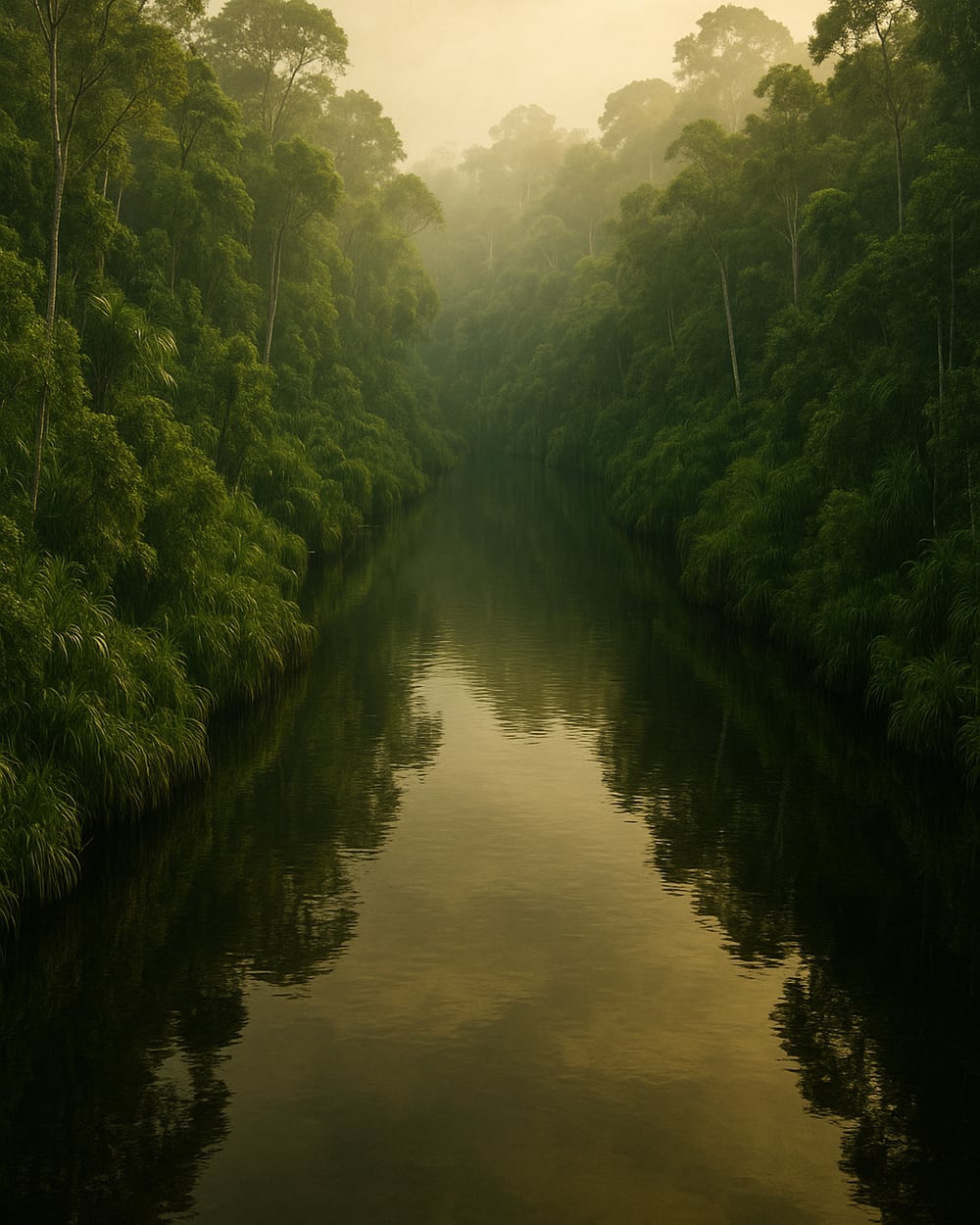
A large part of Central Kalimantan sits on peat swamp, a landscape built from partly decomposed plant material that has accumulated over thousands of years. In parts of Sebangau National Park the peat dome reaches about 12 meters deep. Left undisturbed, peat swamp stays waterlogged and is naturally resistant to fire.
That protection has been weakened. Drainage canals dug for logging and land conversion pull water out of the peat, and dry peat is highly flammable. Conservation groups working in Tanjung Puting have pointed to a combination of rising heat, long dry spells, and the conversion of rainforest to plantations, timber and mining as the factors that have dismantled the forest's natural fire defenses. Even legally protected areas such as Sebangau are affected by older canal networks that continue to drain the land.
Peat fires behave differently from ordinary forest fires. They can smolder underground for weeks, sometimes re-emerging at the surface after the visible flames are gone, which is why they are sometimes called "zombie fires." They produce dense, toxic smoke and are very hard to extinguish from the air alone, which matters because thick haze often grounds the helicopters used for water-bombing. In Tanjung Puting, officials said worsening haze hampered aerial operations in October.
Peat also stores enormous amounts of carbon. One conservation organization estimates that Sebangau's peat swamp holds more than three gigatons of carbon. When peat burns, that carbon is released into the atmosphere. A project report from the Darwin Initiative notes that in severe fire years, emissions from peat fires in this region have exceeded those of the entire United Kingdom.
Effects on the Forest: Tanjung Puting and Sebangau
Tanjung Puting National Park protects a mosaic of habitats, including peat swamp, tropical heath forest, lowland rainforest and riverside vegetation. Fire damages all of them, but not equally. Surface fires can scorch the understory and kill young trees, while peat fires can destroy root systems and lower the ground level itself, making natural regeneration slow and uncertain.
The forest has been here before. The 2015 fire season, also driven by El Niño, destroyed more than 90,000 hectares of rainforest in the Tanjung Puting area, according to Friends of Nature, People and Forest (FNPF). In Sebangau, the Borneo Nature Foundation estimates that about 10 percent of the park's forest was lost that year.
In early September 2026, a fire crossed the boundary of Sebangau National Park for the first time this season. Local teams pushed it back, and it was reported to be largely confined to sedge and open peat, although some reforestation sites were affected. Those restoration plots matter: they represent years of work to rewet and replant land that burned in earlier fire seasons.
The broader lesson from past fire years is that recovery is measured in decades, not seasons. Fruit-bearing canopy trees take many years to mature, and areas that burn repeatedly can shift from forest to fern and scrub, which burn even more easily the next time.
Orangutans and Other Wildlife Under Threat
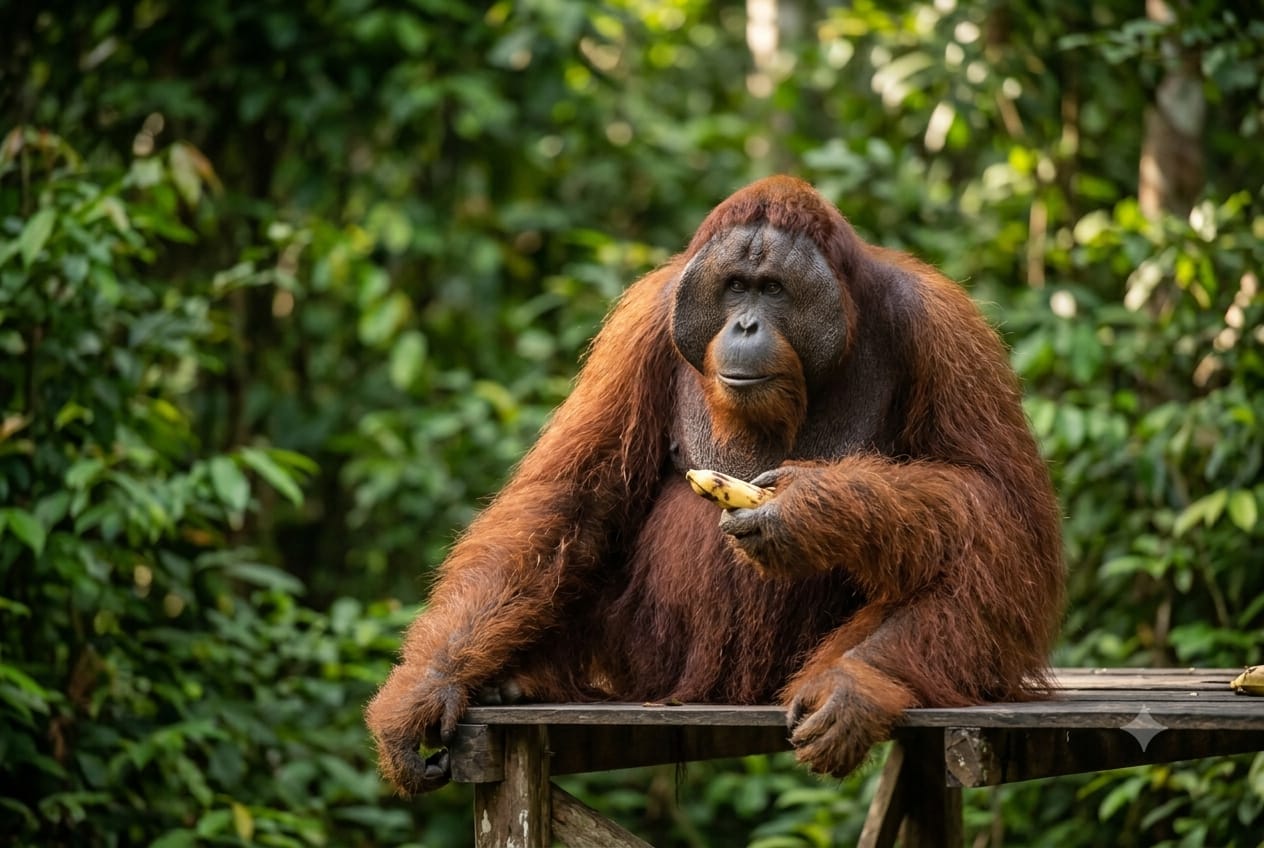
Central Kalimantan holds two of the most important remaining strongholds for the critically endangered Bornean orangutan. Tanjung Puting is often cited as having the largest population of wild orangutans in the world, and Sebangau is home to an estimated 6,000 to 9,000.
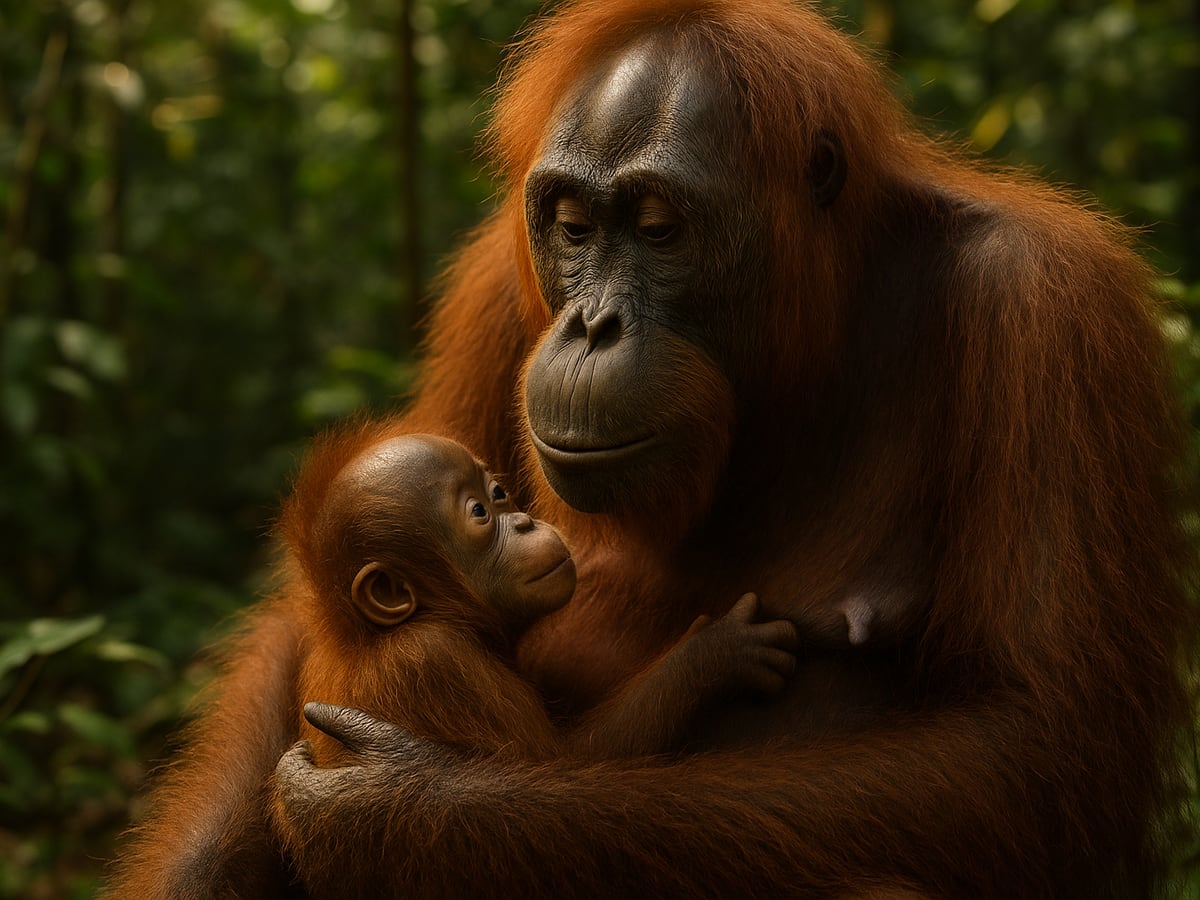
Fire threatens orangutans in several ways. Individuals can be burned or suffer smoke inhalation. Even when animals escape the flames, they may lose the fruit trees they depend on, forcing them to move across the ground, into plantations or closer to villages, where they are more vulnerable. Orangutans reproduce slowly, with females raising a single infant every several years, so losses from a fire season take a long time to rebuild.
The toll on wildlife is already visible. According to Indonesia's Forestry Ministry, 254 animals had been rescued from fire zones across Kalimantan and Sumatra by September 29, and the conservation group YIARI reported rescuing at least 46 orangutans from fire-affected areas in West Kalimantan. Rescue teams have recovered orangutans from burning peatland, including a mother and infant found with embers still smoldering beneath their tree, and a young orangutan with burns on its hands and feet was reportedly found trapped near Sebangau and moved for treatment. In Tanjung Puting, volunteer firefighters with the Green Orangutan Foundation of Kalimantan (YOHK) said they found animals dead and dying as the fires spread. No complete count of wildlife losses exists yet.
Orangutans are the most visible victims, but they are not alone. Tanjung Puting is also home to proboscis monkeys, gibbons, sun bears, clouded leopards, hornbills and many reptiles, fish and invertebrates. Smaller and slower animals have little chance of escaping a fast-moving fire, and their losses are rarely counted.
The People Behind the Park: Tourism, Livelihoods and Health
The fires are not only an ecological event. Smoke has affected the health and daily life of people across the region: Indonesia's Health Ministry reported more than 400,000 cases of acute respiratory infection in seven provinces as of November 2. Visibility dropped sharply in Palangka Raya and other cities, authorities extended emergency response status, and haze disrupted air travel. Flights to and from Pangkalan Bun, the gateway town for Tanjung Puting, were among those rescheduled during the worst of the smoke, and other airports across Borneo reported cancellations. Fires also reached the edges of settlements and damaged community plantations in the area.
Tourism is one of the ways local people earn a living from a standing forest. Visitors to Tanjung Puting typically travel by river from the town of Kumai, and the work behind each trip involves a wide network of people: boat crews and cooks, licensed guides, park rangers, drivers, boat builders, market vendors, and homestay and guesthouse owners. Figures vary by source, but visitor guides citing park data put arrivals at close to 80,000 in 2025, with roughly three-quarters of visitors coming from abroad. For many families those visits are a primary source of income.
Haze and fire put that income at risk in several ways. Smoke makes river trips unpleasant or unsafe, flight disruptions make the area harder to reach, and news coverage of burning orangutan habitat can lead travelers to postpone or cancel. After flames came close to the Tanjung Harapan feeding area near Sekonyer Village, the park authority announced a temporary closure of most visitor areas from October 24, with Camp Leakey and Pondok Tanggui as exceptions. Tours have since resumed in adjusted form: local operators report that the park is safe to visit, Tanjung Harapan remains closed for now, and expeditions substitute a stop at Pondok Tanggui. Small operators and individual workers, who have the least financial cushion, tend to be hit first. Regional commentators in neighboring Malaysian Borneo have made the same point about boat operators, guides and homestay owners, for whom one ruined season can mean a difficult year.
There is another side to this story. Many of the people who earn a living from the forest are also its first line of defense. According to YOHK, fires began spreading toward Tanjung Puting's core on September 16, and about 30 volunteers, working with the Indonesian Tour Guide Association, spent weeks fighting the flames with whatever equipment they could find. Their open letter to the president, asking for water-bombing aircraft, passed 10 million views on Instagram in October. Community fire awareness groups also joined police, the military and forest firefighters in the response.
What Happens Next: Recovery and Prevention
Rain is the most important factor in ending a fire season, and it has started to arrive. Heavy rain fell on parts of Tanjung Puting on October 26 and again on November 2, and by mid-November rain was falling across parts of Kalimantan. The fires are not over, though. As of November 14, authorities still counted about 255 hectares of fire at 21 hotspots in Central Kalimantan, with ground and aerial operations continuing, including in Tanjung Puting. Disaster officials have warned that peat can keep embers alive beneath the surface after rain, and that the sudden shift from drought to downpours raises the risk of floods and landslides in some areas.
Longer term, conservationists point to three areas of focus:
- Rewetting peat: Blocking old drainage canals so that water stays in the peat is widely considered the most effective way to reduce fire risk. The Borneo Nature Foundation, for example, has built dams and replanted tens of thousands of native seedlings in burned peatland in Sebangau.
- Faster response: Local experts have long argued that the gap between detecting a hotspot and getting responders to the scene is a key weakness, particularly in remote areas of the park.
- Community-based fire management: Training, equipping and paying local fire teams keeps knowledge, and income, in the communities that live closest to the forest.
Academics and advocacy groups also call for stronger land governance, including tighter control over drainage, clearing and plantation expansion on peatland, so that conditions that make fires worse are addressed before the next dry season.
How to Help
Individuals can contribute in a few practical ways:
- Support organizations working on the ground: Groups active in Central Kalimantan include the Borneo Nature Foundation (Sebangau), Orangutan Foundation International (Tanjung Puting), Friends of Nature, People and Forest (FNPF) (Tanjung Puting and the Lamandau River Reserve), and the BOS Foundation (peatland protection and orangutan rehabilitation). Several run emergency fire funds during fire season.
- Travel responsibly when conditions allow: Check current air quality and park advisories before planning a trip, avoid the peak of the dry season when fire risk is highest, use licensed local guides and operators, and follow park rules on distance from wildlife. Booking ethical river safaris such as a view 3-day Tanjung Puting itinerary details or 4D3N deep expedition directly funds boat crews, conservation rangers, and local community livelihoods that protect standing forests. Spending that stays with local boat crews, guides and small businesses helps keep a standing forest more valuable than a cleared one.
- Share accurate information: Fire seasons often generate dramatic images and incomplete numbers. Relying on official data and established conservation organizations helps keep the conversation grounded.
- Pay attention to supply chains: Palm oil, pulp and paper, and timber are among the drivers of land conversion in Borneo. Choosing products with credible sustainability certification can reduce pressure on forests over time.
Frequently Asked Questions
Fires have burned across Kalimantan, the Indonesian part of Borneo, with Central and West Kalimantan among the worst affected. In Central Kalimantan, fires have affected Tanjung Puting National Park, areas around Palangka Raya, and land along the edge of Sebangau National Park.
Not completely. Rain has reached parts of Central Kalimantan, including Tanjung Puting, since late October, but as of November 14 about 255 hectares were still burning at 21 hotspots in the province. Smoldering peat can reignite after rain, so monitoring continues.
Peat is dense organic material that can burn underground, below the reach of surface water and aerial water-bombing. Drained peat is especially dry, so fires can smolder for weeks and flare up again even after rain begins.
Drought and El Niño create the dry conditions, but most fires in the region are started by people, often to clear land. Drained peatland and degraded forest then allow those fires to spread far further than they otherwise would.
Fire can injure or kill orangutans directly, and smoke harms their health. Habitat loss also removes fruit trees, forcing animals to move into unfamiliar or dangerous areas. Because orangutans breed slowly, populations are slow to recover.
Yes, with adjustments. Local operators report that Tanjung Puting is safe to visit. The feeding station at Tanjung Harapan remains closed for now, and expeditions substitute a visit to Pondok Tanggui; the park authority kept Pondok Tanggui and Camp Leakey open when it closed most visitor areas on October 24. Fires were still being fought elsewhere in Central Kalimantan in mid-November, so conditions can change. Check the latest advisories from the park authority, a licensed local operator and your airline before planning travel.
Donating to established conservation groups, traveling responsibly with licensed local operators, and supporting sustainable products are among the most direct options. Groups working in Central Kalimantan are listed above.
Sources and Further Reading
This article draws on reporting and published material from The Jakarta Post (October 13 and November 6, 2026), ANTARA News (October 12 and October 28, 2026), reports of BNPB statements published by Kompas (November 15), Okezone (November 4) and Bicara Surabaya (November 16), Tempo (October 2026), Jakarta Globe, Detik (October 26), Mounture (park authority closure notice), Bernama (August 27), the Associated Press (August 21 and September 14), Asia News Network (August 24), Courthouse News Service, WALHI, RRI (Voice of Indonesia), Borneo Nature Foundation, Orangutan Foundation International, Friends of Nature, People and Forest (FNPF), One Tree Planted, and Darwin Initiative project reports. Fire statistics change as monitoring continues, and figures are estimates from the sources named. Figures are current to November 16, 2026.
15+ years managing international ecotourism expeditions and conservation operations.
SIAP MENJELAJAH?
Mari wujudkan petualangan Borneo Anda
Konsultasikan rencana perjalanan Anda bersama tim lokal kami.
Hubungi Kami